
Introduction
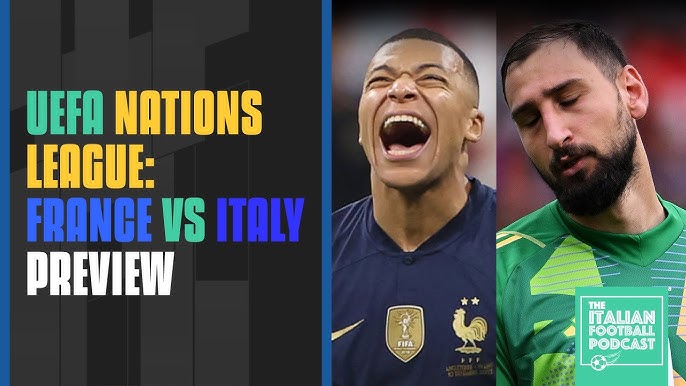
When two footballing giants meet on the pitch, the entire world takes notice. The clash between the France national football team vs Italy national football team lineups has always generated immense anticipation, not only because of the rich history between these two nations but also due to the tactical depth and star power they bring. Fans are eager to know how managers shape their squads, which players make the starting eleven, and how substitutions or formations impact the outcome.
In this article, we’ll take a deep dive into the lineups of France and Italy, explore their importance, analyze key strategies, discuss challenges, and look at how future trends might influence the way both teams line up in major tournaments.
Understanding the Basics – Lineups in International Football
In football, a lineup refers to the starting players selected by the coach for a match. For fixtures like France national football team vs Italy national football team lineups, these choices often decide the tempo and tactics of the entire game.
Key factors that determine lineups:
- Formations (e.g., 4-3-3, 3-5-2, 4-2-3-1)
- Player form and fitness
- Opponent analysis (strengths and weaknesses)
- Match importance (friendly, qualifier, or tournament knockout)
For France, lineups often highlight attacking flair, creativity in midfield, and pace on the wings. Italy, historically, has emphasized defensive solidity, tactical discipline, and clinical finishing.
Importance of Lineups in Big Matches
Why do lineups matter so much in clashes like France national football team vs Italy national football team lineups?
- Tactical Identity
Lineups reflect the manager’s philosophy. France might prioritize attacking transitions, while Italy focuses on defensive structure. - Key Player Roles
Decisions about whether stars like Kylian Mbappé, Antoine Griezmann, Marco Verratti, or Federico Chiesa start can heavily influence outcomes. - Psychological Impact
A strong starting eleven boosts team confidence and intimidates the opponent. - Flexibility and Adaptability
Modern football requires in-game tactical switches, making initial lineups and bench strength crucial.
Strategies and Insights – How Lineups Shape Matches
France’s Approach
- Attack-Minded: Typically lines up with a 4-3-3 or 4-2-3-1, putting emphasis on wingers and a central striker.
- Creative Midfield: Relies on versatile midfielders who can break lines.
- Full-Back Overlaps: Provides width and supports attacks.
Example: In the 2018 World Cup, Didier Deschamps’ France used pace and quick transitions to overpower teams.
Italy’s Approach
- Defensive Solidity: Known for the 3-5-2 or 4-3-3, built around a strong backline.
- Midfield Control: Players like Jorginho or Verratti dictate tempo.
- Counter-Attacks: Uses speed on the wings or second strikers.
Example: Italy’s Euro 2020-winning campaign showcased their ability to balance defense with dynamic attacks.
Direct Matchup Dynamics
When analyzing France national football team vs Italy national football team lineups, consider:
- France’s attacking trio vs Italy’s defensive wall.
- Italy’s disciplined midfield vs France’s creative playmakers.
- Set-pieces and tactical fouls as deciding factors.
Real-World Examples of Notable Lineups
- 2006 World Cup Final
- France lineup: Zidane, Henry, Vieira leading the charge.
- Italy lineup: Buffon, Cannavaro, Pirlo in control.
- Result: Italy won on penalties after a 1–1 draw.
- Euro 2000 Final
- France fielded stars like Deschamps and Trezeguet.
- Italy relied on defensive icons like Maldini.
- Result: France won 2–1 with a golden goal.
- Nations League 2021 Semifinal
- France’s lineup included Mbappé, Benzema, and Griezmann.
- Italy lined up with Chiesa, Barella, and Donnarumma.
- Result: France won 2–1 after a comeback.
These matches show how lineups directly impacted outcomes, whether through star power or tactical execution.
Common Mistakes or Challenges in Lineup Selection
- Over-Reliance on Star Players
Managers sometimes stick with big names despite poor form. - Ignoring Opponent’s Strengths
Not adapting lineups to counter threats can cost games. - Injuries and Fatigue
International football demands balancing player workload. - Rigid Tactical Choices
Refusing to adjust formations mid-game can be a fatal error. - Lack of Squad Rotation
Overplaying key players risks burnout before crucial fixtures.
Tips, Strategies, and Future Trends in Lineups
Tips for Managers
- Blend Experience and Youth: Combining veterans with emerging stars balances the squad.
- Adapt Tactically: Switch between systems depending on opponent.
- Focus on Set-Pieces: Train specialists for free-kicks and penalties.
- Monitor Player Fitness: Use sports science to avoid injuries.
Future Trends
- Data-Driven Lineups
Coaches will increasingly use analytics to optimize player selection. - Positional Fluidity
Players will take on hybrid roles, making lineups more dynamic. - AI and Technology
Predictive algorithms may assist in picking lineups. - Greater Squad Depth
As schedules become congested, rotation and bench strength will be more important. - Youth Integration
Nations like France and Italy will continue developing academy players for future tournaments.
FAQs
Q1: Why are France national football team vs Italy national football team lineups so significant?
Because they reflect tactical choices, star player roles, and strategies that influence the outcome of the match.
Q2: Which formation does France usually use?
France often uses a 4-3-3 or 4-2-3-1 to maximize attacking flair.
Q3: How does Italy approach its lineups differently?
Italy prioritizes defensive organization and midfield control, often with a 3-5-2 or 4-3-3.
Q4: Do past matches between France and Italy influence future lineups?
Yes, managers often study historical clashes to refine strategies.
Q5: What trends might define future lineups?
Expect more data-driven decisions, positional flexibility, and deeper squad utilization.
Conclusion
The rivalry between France and Italy is one of football’s greatest, and the France national football team vs Italy national football team lineups are at the heart of these encounters. Lineups showcase not just the talent available but also the philosophies of the managers, the tactical chess game on display, and the historical weight each match carries.
From legendary finals to modern clashes, these lineups have shaped unforgettable moments. While challenges exist—such as injuries, tactical rigidity, or over-reliance on stars—the future of international football will see even more strategic and data-driven decisions.
Ultimately, understanding the dynamics of lineups helps fans appreciate the game beyond goals and highlights—it reveals the blueprint behind the drama.