
Introduction
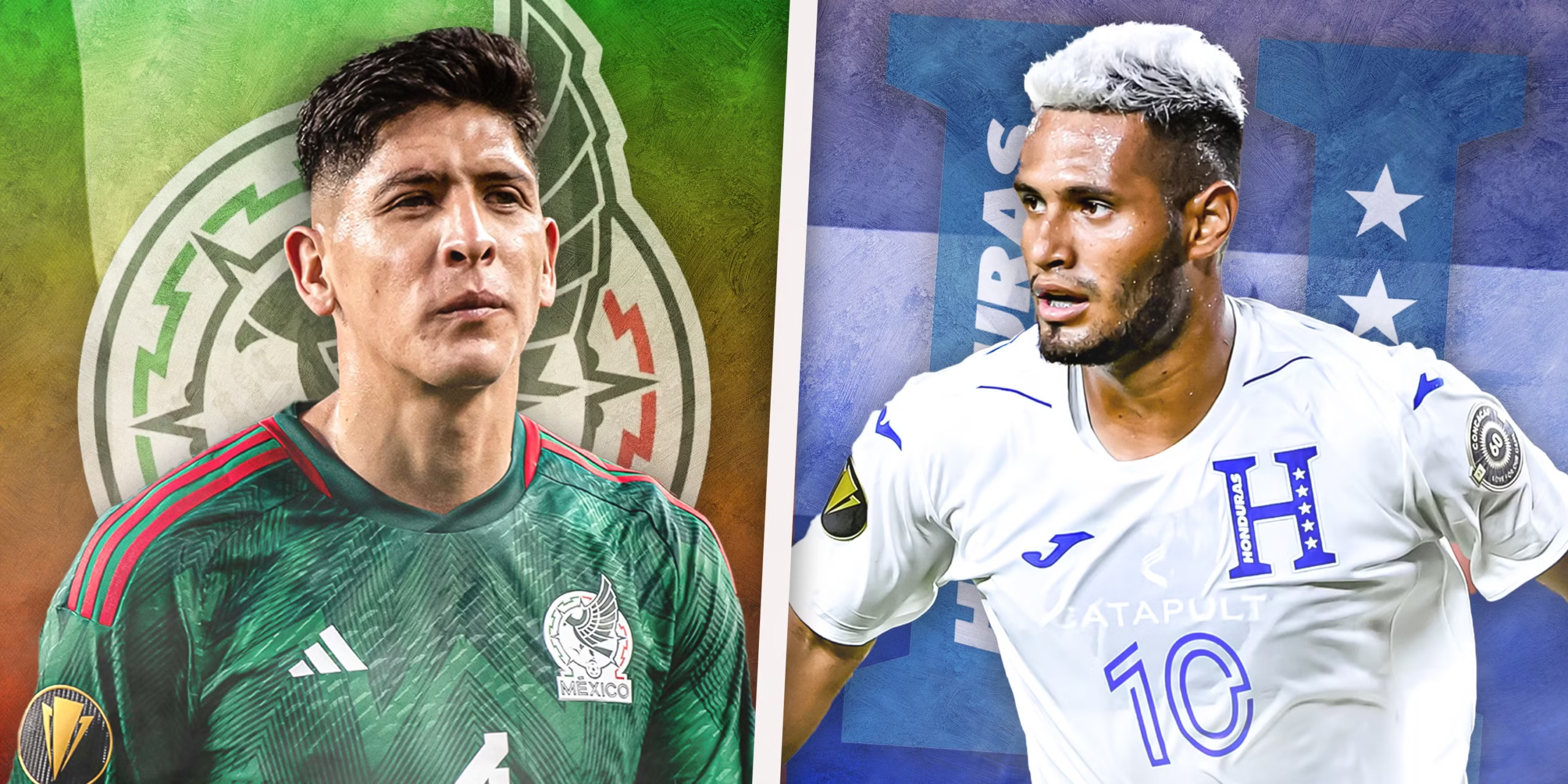
Few rivalries in CONCACAF football generate as much anticipation as the clash between Mexico and Honduras. Fans don’t just want to see goals; they want to know which stars will start, how coaches adjust formations, and how tactical decisions influence the game. The Mexico national football team vs Honduras national football team lineups often set the stage for memorable battles—whether in World Cup qualifiers, Gold Cup fixtures, or friendlies.
This article offers a detailed look at these lineups: what they mean, why they matter, how strategies differ, and how future trends might shape them. By examining past encounters, common mistakes, and tactical insights, readers will understand why lineups aren’t just a list of names—they’re the blueprint for victory.
The Basics: What Are Lineups in Football?
A lineup refers to the list of starting players and formation chosen by a coach before a match. For fixtures like the Mexico national football team vs Honduras national football team lineups, these selections reveal the coach’s tactical plan.
Key elements include:
- Formation choice (e.g., 4-3-3, 3-5-2, 4-4-2).
- Roles assigned to midfielders, defenders, and attackers.
- Bench strength for substitutions.
- Opponent analysis, as rival strengths and weaknesses dictate lineup adjustments.
Mexico tends to prioritize attacking flair, quick wingers, and midfield creativity. Honduras, on the other hand, often emphasizes compact defending, physical duels, and counterattacks.
Why Lineups Matter in Big Matches
In international football, particularly in games like Mexico national football team vs Honduras national football team lineups, the chosen XI can be the deciding factor.
Importance of Lineups:
- Tactical Identity
Mexico usually expresses possession-based, attacking football, while Honduras opts for resilience and defensive organization. - Key Player Impact
Whether Mexico starts Hirving Lozano or Honduras deploys Alberth Elis drastically alters attacking approaches. - Psychological Edge
A lineup featuring star names intimidates opponents and boosts fan confidence. - Game Dynamics
Lineups dictate whether a game becomes an open contest or a cagey battle.
Strategies and Insights: How Mexico and Honduras Build Their Lineups
Mexico’s Tactical Blueprint
- Formation Preference: Usually 4-3-3 or 4-2-3-1.
- Key Features:
- Pace on the wings (Lozano, Antuna).
- Midfield creativity (Edson Álvarez, Erick Sánchez).
- Solid central defense to handle physical strikers.
- Strengths: Possession play, fluid attacks, pressing high.
Example: In the 2023 Gold Cup, Mexico’s lineup showcased both depth and attacking prowess, with a mixture of European-based stars and domestic talent.
Honduras’s Tactical Blueprint
- Formation Preference: Often 4-4-2 or 4-5-1.
- Key Features:
- Defensive blocks to absorb pressure.
- Counterattacking with pace.
- Physical midfield duels.
- Strengths: Compact defense, aerial ability, and opportunistic goals.
Example: Honduras’s 2017 World Cup qualifying draw against Mexico highlighted their defensive discipline, frustrating El Tri despite superior possession.
Real-World Examples of Lineups
2011 Gold Cup Quarterfinal
- Mexico lineup: Javier Hernández spearheaded attack.
- Honduras lineup: Disciplined backline with Wilson Palacios in midfield.
- Result: Mexico won 2–0 after extra time.
2017 World Cup Qualifier
- Mexico lineup: Lozano, Guardado, and Vela controlled midfield and attack.
- Honduras lineup: Balanced 4-4-2, relying on counter chances.
- Result: A tense 0–0 draw.
2023 CONCACAF Nations League
- Mexico lineup: Mixed youth and experience, giving opportunities to rising stars.
- Honduras lineup: Stacked defensively, looking to hold shape and strike late.
- Result: Mexico narrowly advanced after penalties.
These examples prove that Mexico national football team vs Honduras national football team lineups directly shape outcomes.
Common Mistakes and Challenges in Lineup Selection
- Over-Reliance on Stars
Coaches sometimes play big names despite fatigue or poor form. - Underestimating Opponents
Mexico occasionally fields overly attacking lineups against defensive Honduras sides, risking counterattacks. - Injury Management
International schedules often cause key absences, disrupting lineup balance. - Rigid Tactics
Failure to adjust mid-match can waste a lineup’s potential. - Limited Bench Depth
Honduras sometimes struggles with squad depth compared to Mexico, affecting substitutions.
Tips, Strategies, and Future Trends
Tips for Managers
- Balance Attack and Defense: Mexico must respect Honduras’s counterattacks; Honduras must not sit too deep.
- Utilize Bench Strength: Impact substitutes often decide tight matches.
- Adapt Formations: A 3-5-2 vs 4-3-3 switch can change momentum.
- Focus on Set-Pieces: Games are frequently decided by corners or free-kicks.
Future Trends in Lineups
- Data-Driven Decisions: Coaches increasingly use analytics to predict optimal lineups.
- Youth Integration: Both Mexico and Honduras are promoting U-23 talents into senior squads.
- Flexible Systems: Lineups will become more fluid, allowing in-game shifts between formations.
- Sports Science Influence: Player load management will dictate lineup rotation.
FAQs
Q1: Why are Mexico national football team vs Honduras national football team lineups so important?
They reveal tactical intentions, player roles, and strategies that shape match outcomes.
Q2: What formation does Mexico usually prefer?
Mexico often uses a 4-3-3 or 4-2-3-1 with attacking wingers.
Q3: How does Honduras typically approach lineups?
Honduras emphasizes defensive organization, often with a 4-4-2 setup.
Q4: Have lineups decided key past results?
Yes, many fixtures have hinged on whether Mexico fielded creative attackers or Honduras opted for extra defenders.
Q5: What trends will influence future lineups?
Expect more data-driven decisions, youth promotion, and tactical flexibility.
Conclusion
The Mexico national football team vs Honduras national football team lineups go far beyond names on a sheet—they define strategy, tempo, and ultimately results. Mexico tends to dominate possession and attack with flair, while Honduras builds resilience and counterattacking strength. Both approaches create fascinating contrasts that make their clashes unpredictable.
From Gold Cup knockouts to World Cup qualifiers, the right lineup has been the difference between glory and heartbreak. Looking ahead, as football embraces data, technology, and evolving tactics, these lineups will only become more dynamic and strategically vital.
For fans and analysts alike, studying these lineups is the key to understanding one of CONCACAF’s most enduring rivalries.